Onboard power 12V / 24V / 230V
Installation, expansion and troubleshooting of the entire onboard system. From battery management and fusing to inverters, shore power and 230V wiring to NEN 1010 standards.
Yachting Specialist provides service, maintenance and repair for motor yachts, cruisers and pleasure craft. Specialised in onboard electrical engineering and lithium conversions. Plus drivetrain and engines for the full picture. One point of contact, thirty years of experience, on site from Sneek within a 100 km radius. Beyond that on request.
The focus is onboard electrical engineering: 12/24V DC and 230V AC, lithium, shore power and navigation. Plus drivetrain and engines, because a good installation calls for someone who oversees the whole system.
Installation, expansion and troubleshooting of the entire onboard system. From battery management and fusing to inverters, shore power and 230V wiring to NEN 1010 standards.
Full conversion from lead-acid to LiFePO4, including BMS integration, charging architecture and compatibility with the existing onboard system. For owners who want longer off-grid use or more comfort.
Plotters, radar, AIS, autopilot and sounders: installation, integration and updates. Including troubleshooting of interference and grounding issues that surface during refits.
Maintenance, service and troubleshooting on inboard and outboard engines, driveline, shaft, fuel systems and couplings. Experience with Yamaha Marine and HISWA-recognised inboard work.
A lithium conversion is more than swapping batteries. Charge profiles, BMS choice, alternator protection, integration with shore power and inverter, cable sizing: one wrong link in the chain produces an installation that looks fine until it's actually used. Done properly, it lasts ten years and does what it promises.
Below is a short description of what was done and the challenge involved.


A boat from around 1980, whose owner likes long trips. He got a new installation, designed for how he cruises, with an electrical panel, lithium batteries and a screen at the helm.
He can now stay off shore power for 3 to 5 days, and sees on that screen how much energy is left.
A launch fully stripped and rebuilt with whisper-quiet electric propulsion. Including 48V traction system, DC/DC conversion to 12V onboard, integrated charging architecture and wiring rated for continuous load.
Copper heat exchangers that were fully fouled and clogged. Through disassembly, cleaning and ultrasonic treatment they were restored to as-new condition and refitted, instead of being replaced at great expense. The difference between an eye for refurbishment and the default of "replace what looks broken".
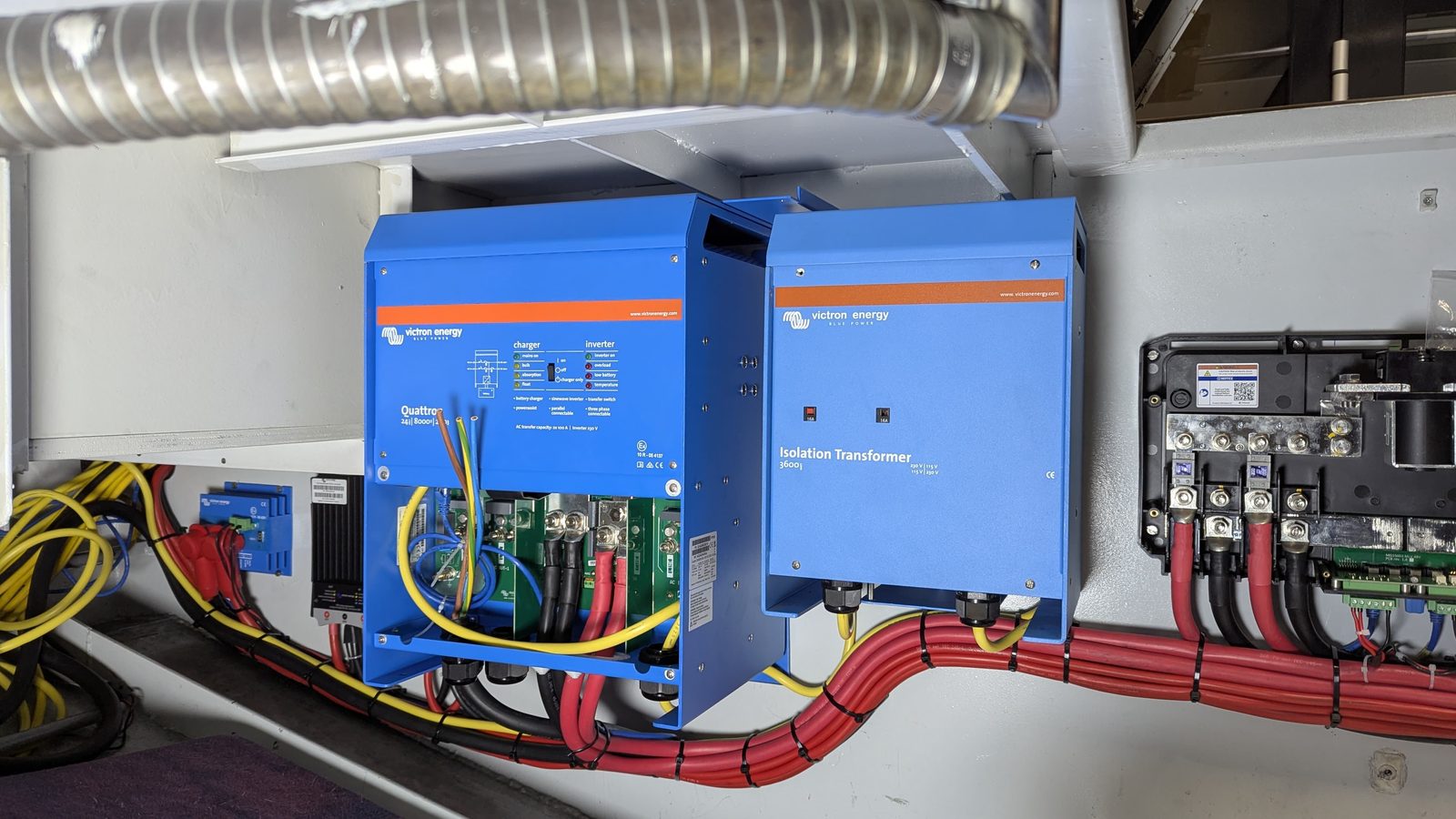
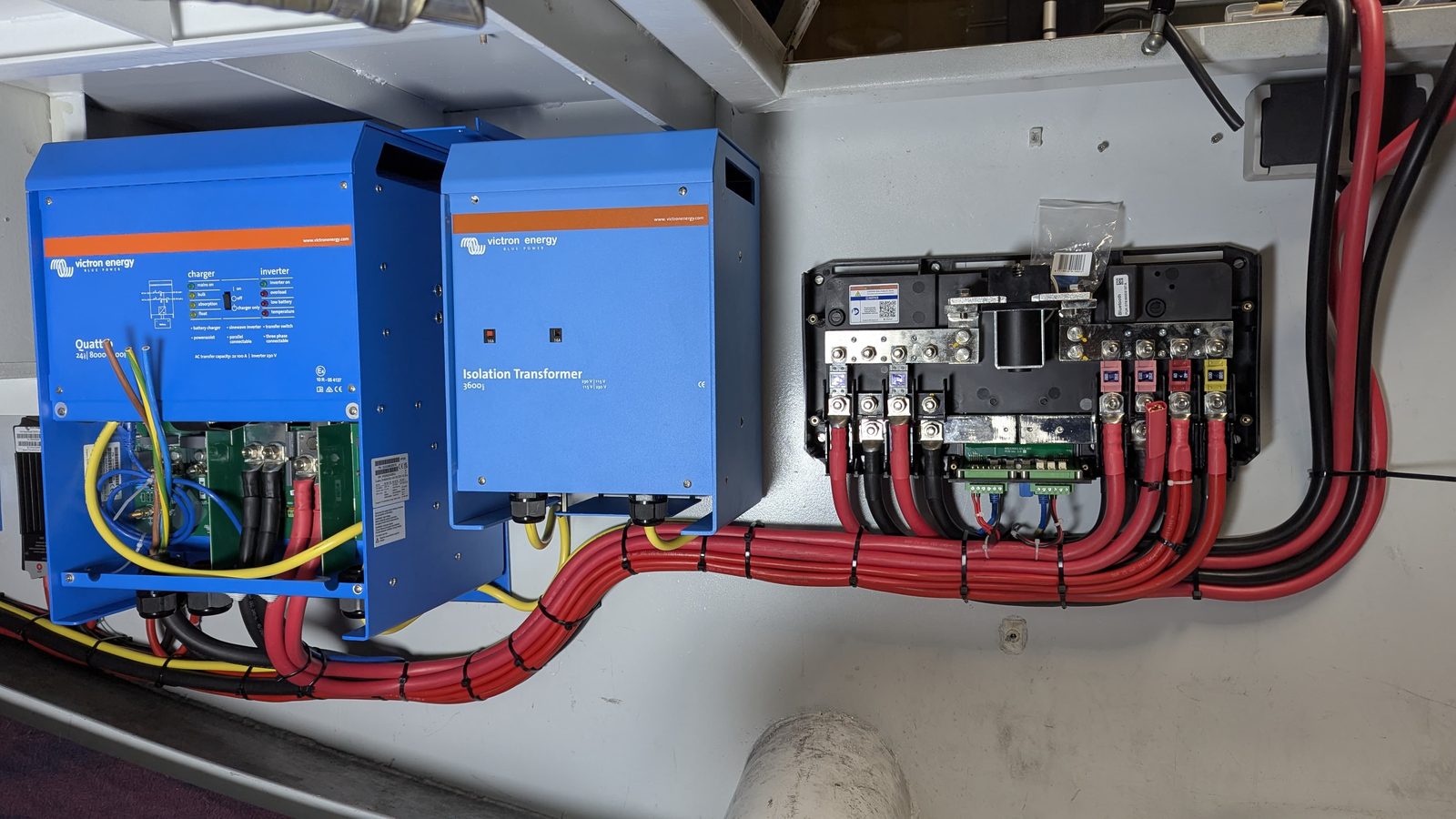
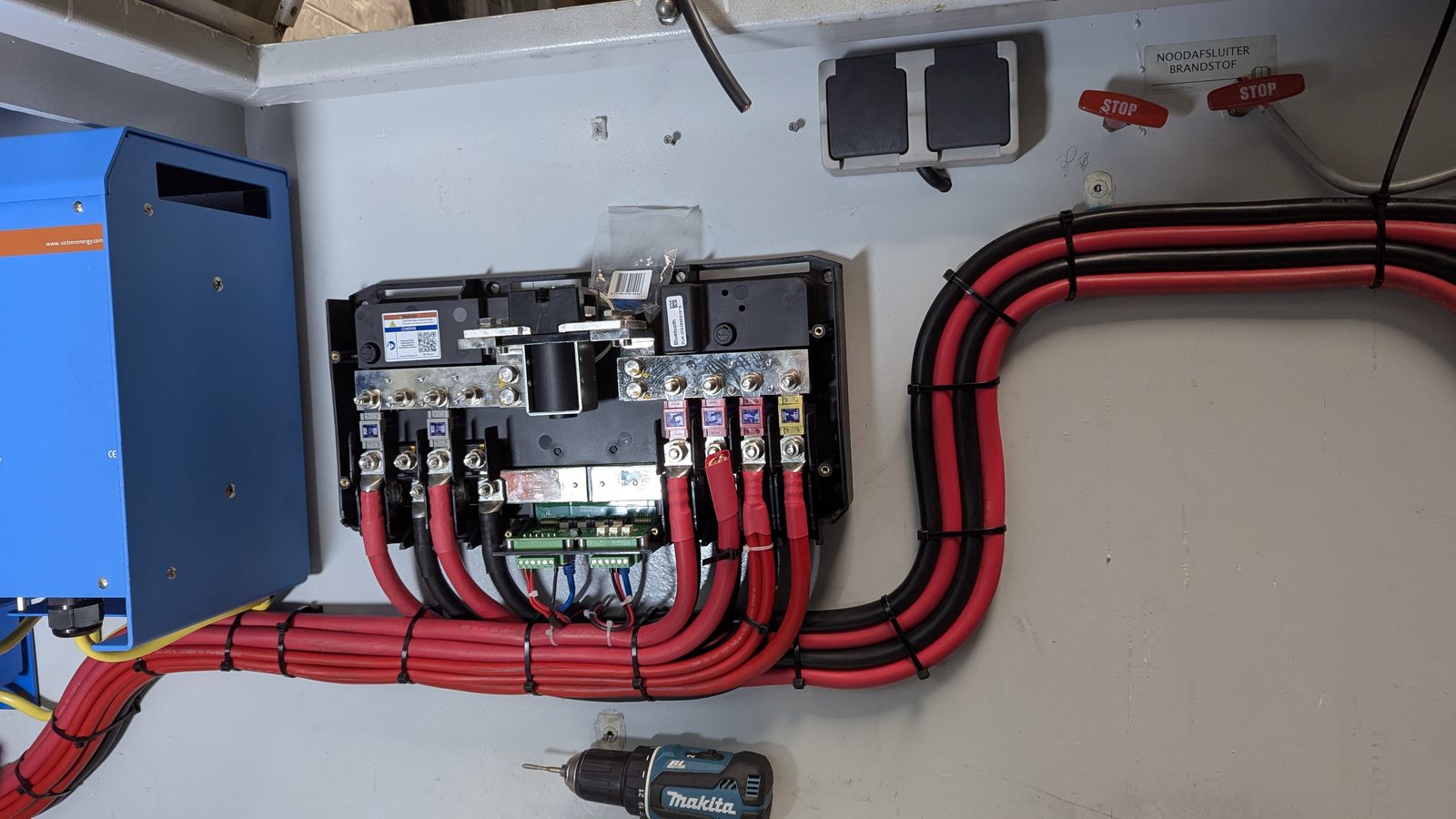
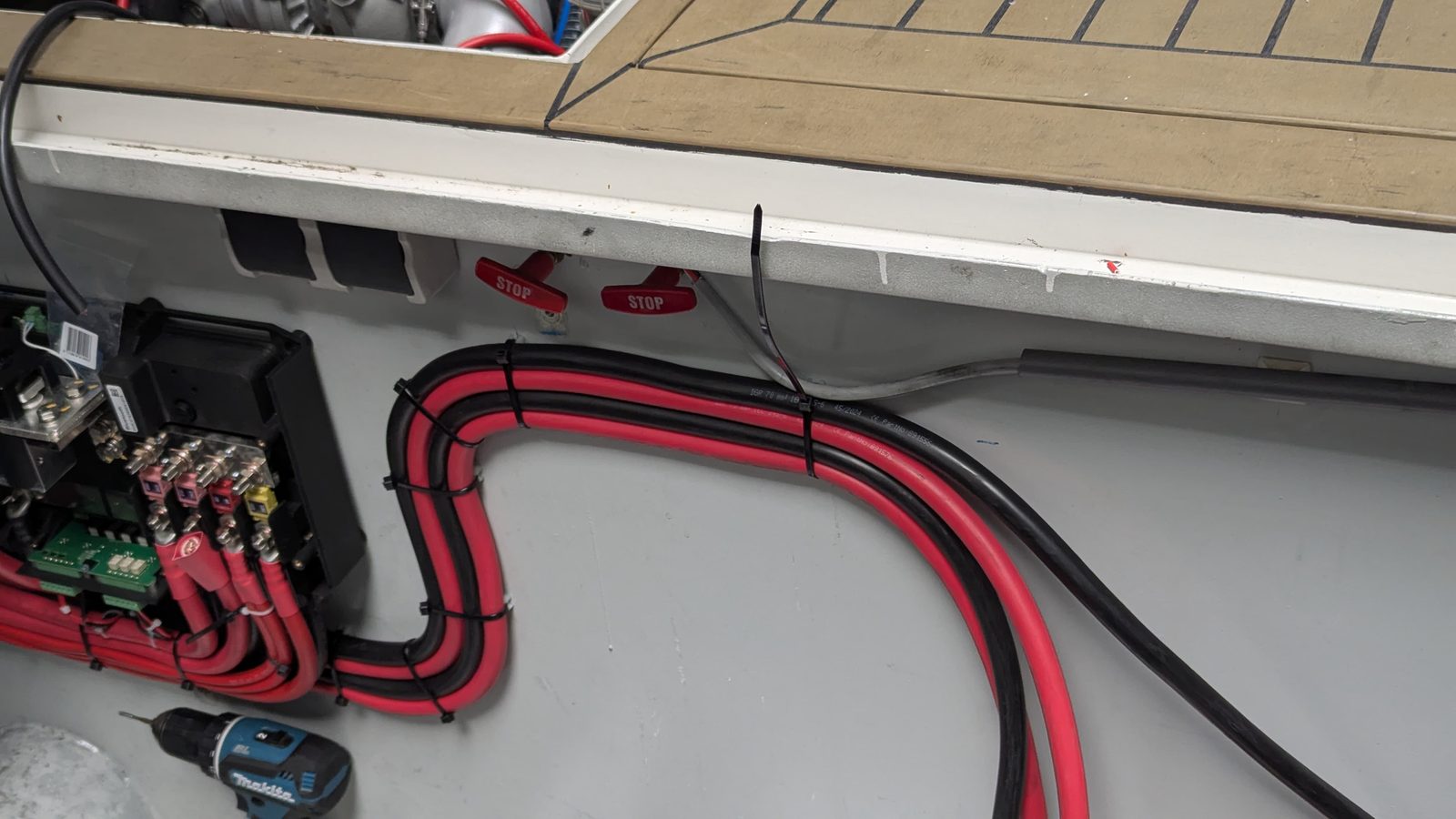
A 14-metre motor yacht where the owner wanted more onboard power: coffee machine, microwave and air conditioning without firing up the generator first. The old lead-acid installation was fully removed and replaced with a 24V lithium system built around a Victron Quattro 24/8000 inverter-charger, with an Isolation Transformer 3600VA for safe shore power and a Lynx Distributor as the main DC bus.
Three weeks of work, from teardown to handover. Result: more usable power, longer off-grid time, and heavy loads that used to need the generator now run without it. The installation meets NEN 1010 standards and is prepared for solar expansion.
No surprises along the way. First inspect, then quote, then plan, then build, and only sign off when it works as agreed.
Phone or email. A brief outline of what's going on.
I come on board, measure and ask the right questions.
Clear quote, fixed price or hourly, depending on scope.
Usually booked about six weeks ahead. Special projects by arrangement.
On site or in the workshop. Sign-off only when it's right.
Short pieces for owners who want to understand what's happening on board, and where it can go wrong.
Not for everyone. A lithium pack pays off when you spend long stretches off shore power, on long passages, or with high onboard consumption. For occasional cruisers with shore power at the marina, lead-acid is often still the smarter choice.
A 500-euro lithium pack sounds attractive until you know what's inside. Missing or unreliable BMS, unmatched cells, no certifications, and cables that can't handle the current. What you save on purchase you pay back in fires, damage and repair time.
Wrong cable sizes, missing fuses on the positive, mixed grounding, connections shaken loose by vibration, and non-marine components used on board. The five mistakes I encounter regularly, and what they cause in practice.
Yachting Specialist is a one-person business run by Marco Werkhoven, based in Sneek. Independent since 2024, after nearly thirty years in technical work, more than two decades of them as an overhaul technician at various organisations.
Watersports were part of my upbringing. I've owned plenty of boats, mostly project boats, from a young age. I've tried working outside the boating world, but it kept pulling me back. Hobby became passion, passion became profession.
Over almost thirty years across different organisations, I saw what could be done better. Owners can be helped faster, better and more directly by a specialist who oversees the whole installation and keeps his commitments. That's why Yachting Specialist exists.
The approach is straightforward: one point of contact, no layers of departments, no half-measures. Every boat is different and every installation has its own logic. My work is reading that logic and making the system do what it should.
Most projects start with a five-minute conversation. Call, email or send a WhatsApp, and we'll arrange a visit on board.